When is a project really completed? Beyond signoff
A signed approval doesn’t guarantee a new process is being used. Before handing over a project, check that employees know how to use it, can get help, and have a plan for follow-up.
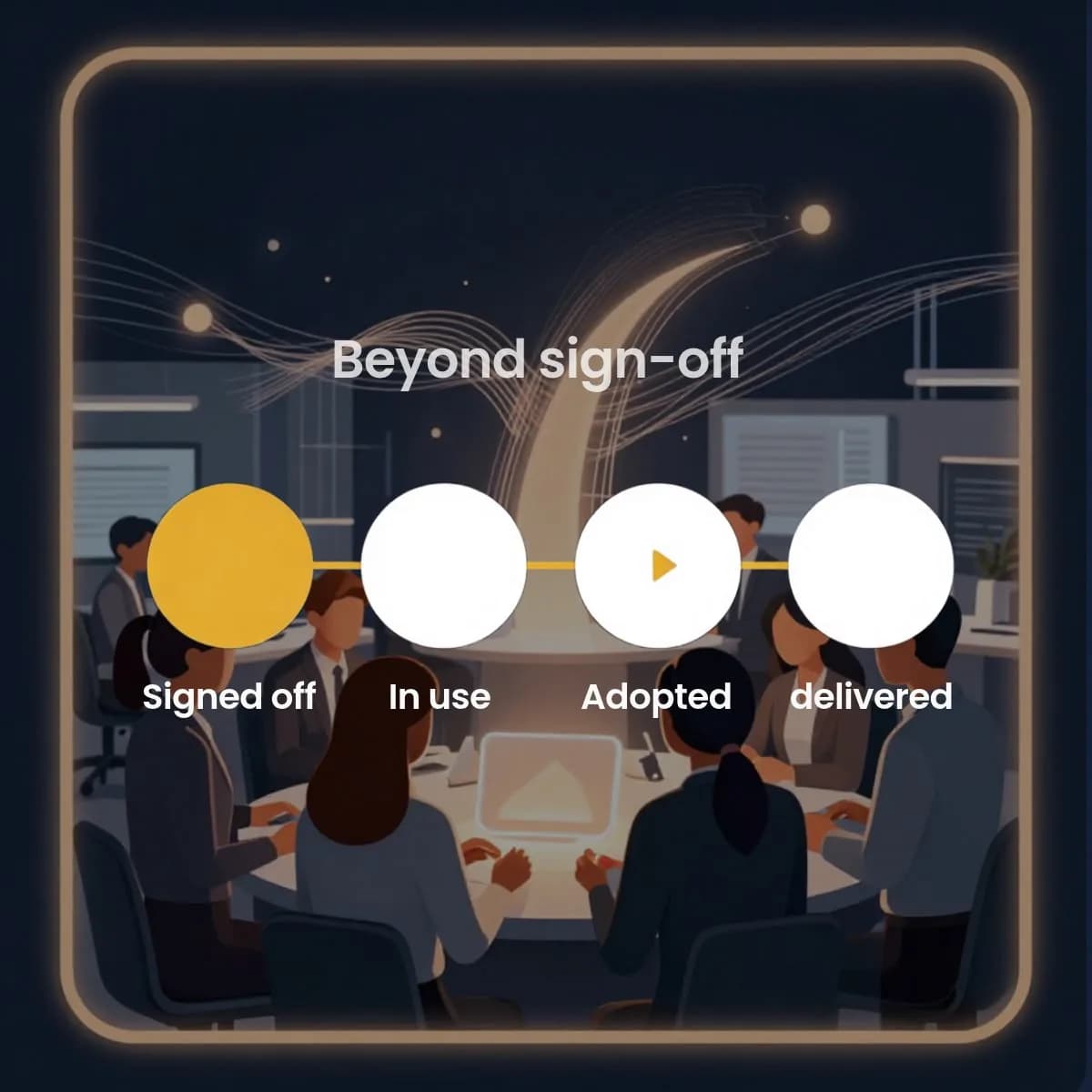
A company hires an outside team to fix the way it handles orders. After months of work, the team demonstrates a new process that works well. The manager signs off on the project, everyone is relieved, and the outside team moves on to its next assignment.
Everyone on your team celebrates, and the team that was hired moves on to their next project. But three months later, the team still keeps the old spreadsheet of the work open because nobody taught them how the new process works. The paper your manager signed might say the work is done, but the reality says something different. Research by Gartner in October 2025 found that only 45% of the employees said that they had reached the goals their company set for a change. The same research found that more than a third of the company leaders said that they will likely wait and see if the new process actually makes some true progress.
So what does change actually mean?
A project can be completed on paper without changing how people work. The outside team has delivered the work, the manager has signed off, but employees are still opening the old spreadsheet. So, where did things go wrong?
There are four things to look at:
- Delivery: Has the outside team completed the agreed work?
- Approval: Has the manager reviewed and signed off on it?
- Adoption: Have employees started using the new process?
- Results: Is the new process actually solving the problem?
These four things may seem straightforward, but they don't always happen together. A manager might approve the work before employees feel comfortable using it. And even when they start using the new process, it may not make their work any easier.
That's why a project handover needs to look beyond the paperwork. The real test is whether the new process works for the people who use it every day.
What happens when employees aren't ready?
A study published by Eagle Hill Consulting in August 2025 surveyed US employees and asked them about changes in their jobs. They found that 34% said the changes were not worth it. 40% of employees felt frustrated about how changes should be rolled out, and only 33% felt seen when leaders chose which changes to implement. A process may look straightforward to the people who designed it, but that doesn't mean it works just as well for the people using it. Employees may have questions, run into problems, or find that the new process adds steps to their work.
After the signature
The real impact starts to show up when the manager officially signs the document with the team that built the new process. If the signed-off paper does not specifically mention what will happen and if anything goes wrong while practicing the new process, then the work was simply never done, and it is just handed over to you.
Before you sign off, check these things
- Employees know how to use the new process. They should be able to handle everyday orders without needing someone to walk them through each step.
- Someone is responsible for support. The team knows whom to contact when something goes wrong.
- Common problems have been tested. The process has been tried in situations employees actually deal with, not just during a demonstration.
- The old process can be retired. The team knows when to stop using the old spreadsheet and where to find the information it still needs.
- There is a plan for follow-up. Someone will check how the new process is working after employees have had time to use it.
A quick demo may show the process works.. These checks show whether the team is truly ready.
About Mansi Avhad
Mansi Avhad leads editorial content with a focus on SEO-driven writing that aligns user intent with clear, simple communication. She excels at simplifying complex topics into meaningful narratives. She believes good content should be simple, intuitive, and genuinely helpful.