- 0178% increase in sustained patient programme engagement
- 0291% reduction in treatment drop-off risk via early warning intervention
- 03 Two clinical AI models predicting wellbeing trajectories with 66%+ outcome accuracy
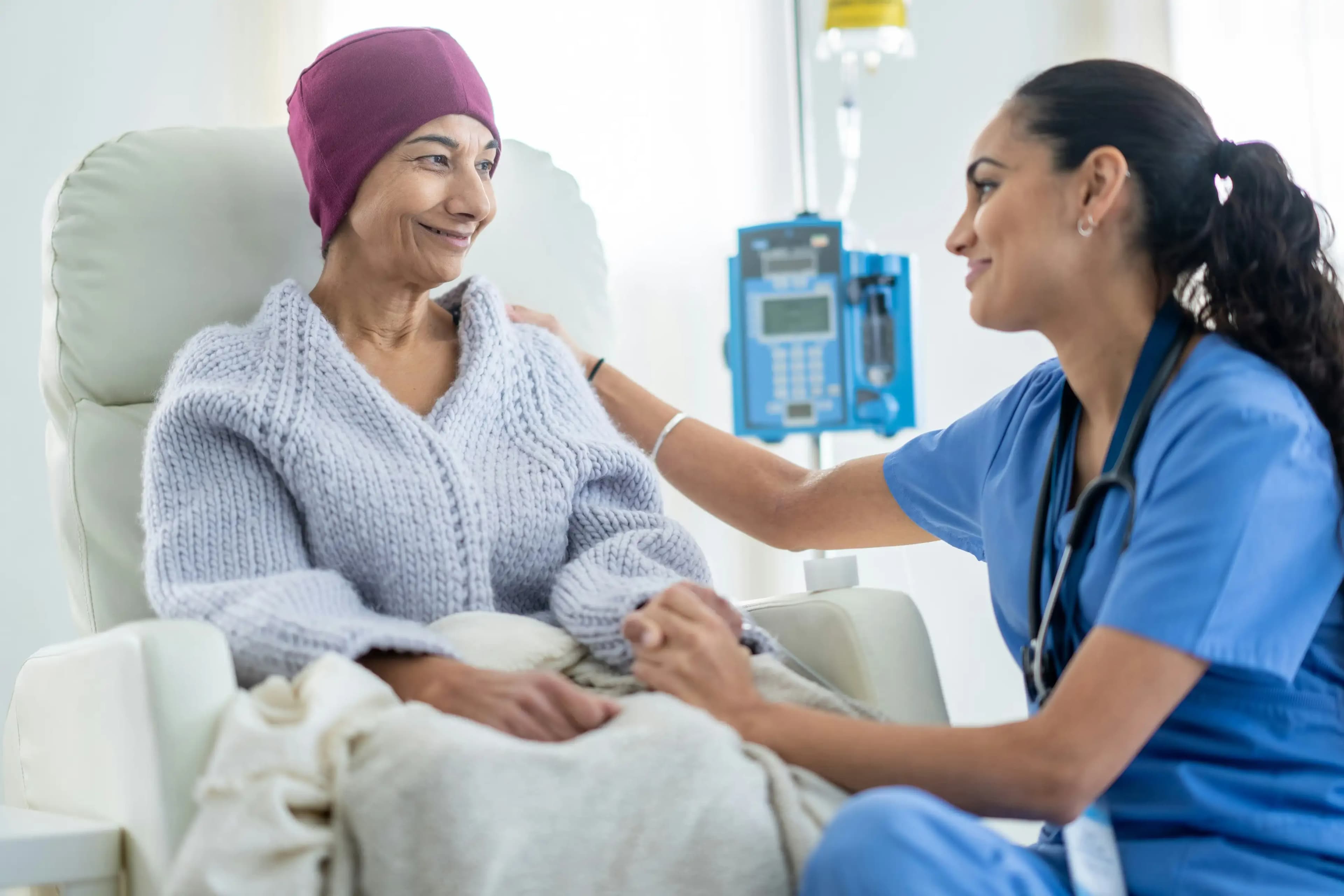
Carer had built a meaningful patient support programme for oncology. Carer helped cancer patients navigate their treatment journey through personalised counselling and clinical resources. Patient numbers were growing, and outcomes were improving. However, the platform was designed for a single audience and a single commercial model. The issue was that Pharma budgets are project-based, approval cycles are long, and the commercial relationship is always one contract renewal away from stalling.
A larger market existed that was largely unserved. Corporates were increasingly aware that cancer was their leading cause of long-term employee absence and that their existing benefits programmes were wholly inadequate for it. But no platform existed that could serve an employer's workforce across the full spectrum - employees already in treatment, and employees who needed to think seriously about prevention.
Insurers faced a version of the same problem at greater scale. Cancer was their least-predictable health event, claims arrived without warning and escalated fast. Every insurer's oncology book was, in effect, unmanaged risk. They had no visibility into which members were deteriorating, which were non-adherent to treatment, and which preventive members were accumulating risk factors that would become claims in three to five years.
Carer had the clinical depth to solve this. What they didn't have was a platform architecture capable of serving three completely different buyers each with a different definition of value, a different data need, and a different way of measuring whether the programme was working
We worked with Carer to redesign the product from the ground up. We moved from a pharma PSP to a dual-audience health platform targeting corporate employee benefits and insurance partnerships.
The first decision was the most consequential. We built two distinct user journeys on the same underlying data architecture.
- The diagnosed journey serves people actively managing a cancer diagnosis. We track their wellbeing across nine validated clinical dimensions, monitoring medication adherence, flagging early deterioration signals, and delivering personalised recommendations that have been calibrated to cancer type and treatment stage.
- The prevention journey for undiagnosed users tracks lifestyle and health factors most associated with cancer risk. The platform delivers targeted guidance to reduce it.
To make both journeys clinically meaningful, we built three custom AI models from scratch.
- The first predicts three-month wellbeing trajectories using a stacked ensemble approach trained on over 100,000 real diagnosed patient journeys across nine weighted health domains. The model is easily able to explain more than two-thirds of outcome variation, with a predictive accuracy of 12.5 points on a 100-point scale.
- The second model handles cancer-specific outcome prediction for diagnosed users, covering 40+ cancer types across six clinical stages.
- The third provides daily risk scoring from vitals data, enabling the platform to catch deterioration signals between formal assessments.
A parallel, major workstream was built entirely for insurance partners. Insurers don't want a patient portal. They want to understand their oncology risk exposure, track where costs are forming, and demonstrate that prevention and intervention programmes are producing a return. We built them a purpose-built analytics portal designed specifically for insurance claims analytics teams. The portal gives insurers six views of their enrolled population:
- An oncology portfolio showing all diagnosed members with live risk stratification (High, Medium, Low) and health trajectory data
- A preventive members panel tracking the at-risk population before a diagnosis occurs
- A claims pipeline showing which cases are approaching high-cost events and what the intervention status is for each
- Interventions register that tracks every active, pending, and completed programme, with a per-patient cost saving breakdown accessible in a single click
- A reports module for scheduled actuarial outputs
- An overview dashboard that consolidates the picture across the entire insured population.
Before this engagement, Carer was a clinically credible PSP with a single route to market. After it, they were a multi-sided health platform with three distinct buyer categories, a defensible AI layer competitors couldn't replicate quickly, and a prevention proposition that doubled their addressable market overnight.
The commercial shift was the most immediate. Moving from pharma PSP contracts to corporate benefit agreements and insurance partnerships meant recurring, scalable revenue. Carer was no longer selling a support service. They were selling a risk management tool.
The AI infrastructure made Carer unique. A care platform built on validated clinical instruments, trained on 100,000+ real patient journeys, with predictive models that demonstrably explain two-thirds of outcome variation - that isn't something a competitor rebuilds in a quarter. It positioned Carer not just as a technology platform but as a clinical intelligence asset, which is how the most valuable health companies in this space are valued.
- Data & AI
- Security & Compliance
- Enterprise Integration
- Platform Engineering
Could Health OS work for your organisation?
Healthcare
Have a similar challenge?
We bring the same product-building discipline to every engagement. Let's discuss how we can help.
Let's Talk